
Post Details
Frequently there are additional criteria such as minimum expenditure thresholds, minimum useful life (in years), non-recurring nature or other requirements. A capital project is a multi-year, large-budget effort that aims to improve existing infrastructure, create new infrastructure, or make some other large change or improvement to public land, property, or equipment. Project management and performance indicator systems are important capital budget implementation tools. A capital improvement project—also called a capital project—is typically a permanent structural change to a property or asset to prolong its life, increase what is cip in accounting its value, or enhance its capabilities.

How is Construction in Progress Recorded in Accounting?

The most common capital costs include material, labor, FOH, Freight expenses, interest on construction loans, etc. One thing to understand is that only capital costs related to an asset under construction are to be kept in the CIP account. The operating costs related to a specific period must be charged to the same accounting period. A construction contract is a specific contract negotiated to build a fixed asset or group of interrelated assets. Frequently review CIP accounts to ensure accuracy and compliance with accounting standards. Detailed CIP records give stakeholders confidence in a company’s financial practices, especially during audits.
Total CIP Balance:
- For a variety of different reasons, though, it can be difficult to match up billings with the amount of work that has been completed (or work in progress).
- Planyard offers an intuitive solution designed to simplify the process for construction professionals.
- Capital improvement planning is primarily used by local government officials to create a long-term plan for capital improvement projects.
- When the project is completed, the accumulated costs move to the appropriate fixed asset account, such as “Building” or “Machinery.”
However, preparing accurate reports is not simple for construction companies whose ledger account work-in-progress assets are unique. Amid the construction progress, these assets are not usable as they require months or years for completion, complicating bookkeeping. Given this, construction companies should delegate their finances to experts, to teams like Monily with the capacity and knowledge to manage multiple balance sheets simultaneously.
How Construction in Progress Affects the Balance Sheet
Delays can extend the period during which CIP is reported, potentially impacting financial projections and investor confidence. On the other side, the transaction will impact the accounts receivable as the customers may not yet make payment. The progress of payment will depend on the contract which may be related to the specific result. Each small job will be considered as finished only after they are delivered to the customers. It requires the company to separate the work into small units which are not practical for all construction.
Essential CIP Journal Entries and Accounting Treatment
CIP accounting ensures businesses accurately capture and report all expenses incurred during the construction phase. Following accounting standards like GAAP (Generally Accepted Accounting Principles) or IFRS (International Financial Reporting Standards) is essential for accurate reporting. Similar to revenue, the expense will be recorded based on the total cost of construction multiplied by the percentage of completion.

Project Setup and Planning
Business A receives a $100,000 bill from Builder’s Warehouse for construction materials. 1) On March 11, 2021, Business A received a $100,000 bill from Builder’s Warehouse for construction materials. Unplanned costs from price changes or delays affect CIP accuracy and profitability. Keep all invoices, contracts, and receipts organized for audits and financial reviews. Explore trending topics in reviews, technology, educational resources, and digital tools, providing valuable insights to help you stay informed and enhance your knowledge in the field.
- This process is known as capitalization, and it confirms that the costs of the project are accurately reflected in the company’s financial statements.
- The progress of payment will depend on the contract which may be related to the specific result.
- One of the key aspects of financial reporting is ensuring that costs are matched with the revenues they generate.
- Similar to revenue, the expense will be recorded based on the total cost of construction multiplied by the percentage of completion.
- Like previously stated, the construction in progress account has a natural debit balance.

However, as the company expands, recruits more employees, and works simultaneously on multiple projects, tracking transactions on a spreadsheet gets difficult and time-consuming. With construction companies quickly evolving, there are more categories and accounts to consider, creating unique challenges for this industry. Among them, learning how to record construction in progress accounting stands out. This guide explains the essential principles of CIP accounting and provides practical strategies for Controllers to maintain accuracy, compliance, and financial clarity throughout your construction projects. For example, if a company spends $500,000 on constructing a warehouse, those costs are tracked in the CIP account until the warehouse is operational. You need to operate a construction-in-progress accounting system when you are constructing assets that will not be completed for an extended period of time.
- One critical aspect that often comes into play is accounting construction in progress (CIP).
- For instance, assume a partially completed warehouse no longer meets regulatory safety requirements.
- This means keeping itemized receipts, invoices, and detailed records of all labor hours (just to name a few).
- Whether you’re managing job site expenses, equipment rentals, or fuel costs, Coast gives you the visibility and control you need to keep projects on budget and accounting accurate.
- Specifically, OpenGov’s budgeting & planning solution helps both budget creation and budget communication to residents and stakeholders.
For professional assistance with CIP accounting or GAAP compliance, contact PVM Accounting today! Specialized construction accounting software can automate cost tracking and ensure compliance with GAAP standards, reducing manual errors. In this blog, we’ll explore how CIP accounting works within the GAAP framework, why it’s essential, and how to apply it to your construction projects.
Track Project Costs
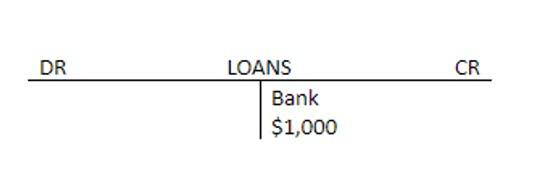
Construction-in-Progress (CIP) accounting is indispensable for businesses striving what is cip in accounting to maintain accurate and comprehensive financial records. CIP stands for “Construction in Progress” in accounting and is used to track costs like materials, labor, and overhead expenses before the asset is complete. These costs are recorded in a CIP account, which is categorized as a non-depreciable fixed asset on the balance sheet. Once the project is finished, the total costs are transferred to the appropriate asset account, and depreciation begins. Construction in Progress (CIP) is a noncurrent asset recorded under the Property, Plant, and Equipment (PP&E) section of a company’s balance sheet. Regularly update the CIP account with new expenses and ensure accurate tracking for better financial management and reporting.
Identifying Abandoned or Terminated Projects
Large-scale construction jobs can take years https://www.bookstime.com/ to complete and often require hundreds of separate expenses. Hiring an experienced accounting team is the best way to ensure that your company maintains accurate, detailed, and up-to-date accounting books through every step of the construction process. Accountants do not begin tracking depreciation of construction-in-progress assets until the addition is complete and in service.
Comentarios recientes