
Post Details

Following a detailed guide to the accounting cycle, it should take business days to close a month. For bigger companies with complicated operations, it might take up to 30 days. By splitting tasks among key accounting roles, the process stays accurate and fast.
Closing Entry Examples
I know that closing entries are crucial for preparing our financial records at the end of an accounting period. Then, you do the same for expenses, but in reverse—debit the income summary for $60,000 and credit the expense accounts to zero them out. The last step in preparing a closing entry is to transfer the dividends or withdrawals into retained earnings or capital. This shows how much of the profit was distributed and reduces the retained closing entries earnings balance accordingly. Another essential component of the Highradius suite is the Journal Entry Management module. This module automates the creation and management of journal entries, ensuring consistency and accuracy in your financial statements.
Double Entry Bookkeeping
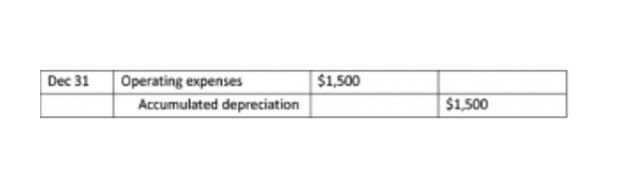
To mitigate this, implementing robust internal controls and utilizing accounting software can help automate and verify entries to reduce the likelihood of mistakes. Closing entries transfer the balances from the temporary accounts to a permanent or real account at the end of the accounting year. Compound entries involve multiple debits and credits from more than what are retained earnings two accounts. This type of journal entries address the need for financial record keeping to ensure accuracy, control and audit compliance. Compound journal entries log complex transactions in a single posting to reduce the number of individual entries. Keeping a regular and updated log of every business transaction is what defines a journal entry in accounting.

Step 4: Transfer Balance
- Once the post-closing trial balance is completed, the accounting cycle begins again.
- Learning how to navigate these transactions is a key concept in any comprehensive accounting course.
- Absolutely, sophisticated accounting software can significantly simplify the process of making closing entries.
- Now, the income summary account has a zero balance, whereas net income for the year ended appears as an increase (or credit) of $14,750.
- Therefore,these accounts still have a balance in the new year, because theyare not closed, and the balances are carried forward from December31 to January 1 to start the new annual accounting period.
- This helps a business earn trust from shareholders, creditors, and regulators.
It’s a delicate balance that corporations must manage – supporting growth and rewarding investment, all shown transparently thanks to closing entries. Without proper closing entries, your financial statements could become inaccurate, making it impossible to evaluate period-by-period performance. The four-step closing process Accounting for Churches transfers information from your income statement to your balance sheet, completing the accounting cycle.
Common Scenarios: From Revenue to Owner’s Equity
The eighth step in the accounting cycle is preparing closingentries, which includes journalizing and posting the entries to theledger. Companies are required to close their books at the end of eachfiscal year so that they can prepare their annual financialstatements and tax returns. However, most companies prepare monthlyfinancial statements and close their books annually, so they have aclear picture of company performance during the year, and giveusers timely information to make decisions. By implementing automated closing processes, businesses ensure greater accuracy while freeing valuable resources for strategic financial activities.
- In this case, we can see the snapshot of the opening trial balance below.
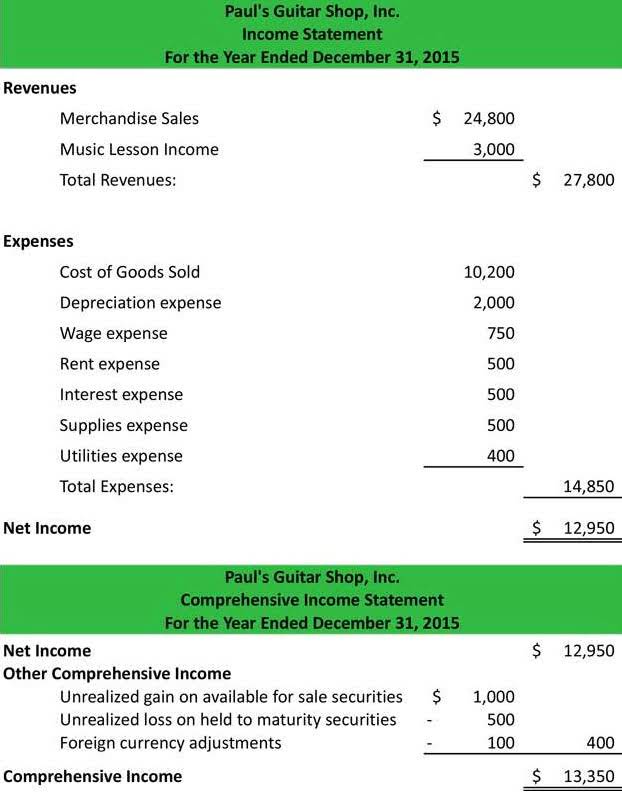
- When the income statement is published at the end of the year, the balances of these accounts are transferred to the income summary, which is also a temporary account.
- You will start by clearing out the income accounts from the income statement (revenue) and crediting the income summary.
- The first step involves gathering and reviewing all financial transactions to verify their completeness and accuracy.
- The process of closing the books at the end of a fiscal year is a crucial aspect of accounting that ensures all financial activities are accurately recorded and reported.
When it comes to auditing and compliance, accurate closing entries aren’t just important, they’re the linchpin of financial integrity. Get them right, and an auditor’s job becomes a smooth operational review; mess them up, and you could find your business in a quagmire of regulatory quandaries. From the Deskera “Financial Year Closing” tab, you can easily choose the duration of your accounting closing period and the type of permanent account you’ll be closing your books to.
- Following the process, learning from closing entries accounting examples, and using the right tools can help you simplify month and year-end closings without any errors.
- Year-end closing is a critical process for any organization, as it ensures that all financial activities for the fiscal year are accurately recorded and reported.
- It is worth mentioning that there is one step in the process that a business may or may not include, step 10, reversing entries.
- This ledger is used to record all transactions over the specific accounting period in question.
- Post-closing procedures involve reviewing and verifying all financial statements for accuracy.
- Net income is the portion of gross income that’s left over after all expenses have been met.

The retail method is primarily used by retailers who maintain records of inventory at retail value. Assuming that the business has been trading for some time, it is usual for the gross margins to be relatively stable. If this is the case then the cost of goods sold can be estimated by applying the gross margin to the revenue for the period. This journal increases the purchases by the beginning inventory and at the same time reduces the inventory account to zero. Part of that income statement is the calculation of gross profit which is determined as follows. When a business sells to its customers, it receives cash either “now” or “later”.
Comentarios recientes